
Fantasy Cricket Team-Building and Advanced Training on COME SPORTS
Official Domain: comefantasy.comThis HOW TO PLAY page is built for users who want serious competitive improvement, not generic tips. COME SPORTS is positioned as a strategy center for advanced and growth-focused players in India. The goal is to teach a repeatable process: collect reliable data, convert it into lineup logic, execute with timing discipline, and improve through structured review after every match cycle.
Many users lose consistency because they treat every match as a separate guess. Professional users treat each match as a data problem. They evaluate player availability, role certainty, venue behavior, weather effect, team tactical patterns, and historical scenario outcomes before they lock an XI. This page gives you that practical framework in clear steps.
Whether you are new to competitive fantasy formats or already active in large IPL pools, this page helps you move from random choices to high-quality decision architecture.

The Four-Phase Learning Model on COME SPORTS
COME SPORTS recommends a four-phase model that converts knowledge into match performance. Phase one is Pre-Match Research, phase two is XI Construction, phase three is Entry Execution, and phase four is Post-Match Review. Users who follow this loop consistently usually improve faster than users who only react to daily trends.
Phase 1: Pre-Match Research
Collect high-impact information before opening contest cards.
Prioritize role certainty, injury updates, and tactical conditions over social noise.
Phase 2: XI Construction
Build lineups by role system, not by player popularity.
Use a balanced mix of stable anchors, context picks, and controlled leverage picks.
Phase 3: Entry Execution
Apply timing discipline and avoid emotional last-minute changes.
Finalize captain logic only after confirming game-script assumptions.
Phase 4: Review and Upgrade
Compare expected outcomes with actual match flow after completion.
Track what worked, what failed, and what should change next cycle.
Confidence Layering
Use high, medium, and low confidence labels for each fixture.
Map your exposure to confidence levels to protect season consistency.
Discipline Engine
Keep a short checklist before every entry: role clarity, matchup fit, captain alignment, exposure control.
If two checks fail, revise before lock.
Step-by-Step: Building a High-Quality XI
Step one is role mapping. Mark each player by expected participation intensity, not headline value. A player with consistent involvement can be more useful than a big-name player with uncertain role depth. Step two is context fit. Ask how this role behaves on this venue against this opponent profile. Step three is ownership interpretation. If one pick is expected to be highly selected, decide whether to align or pivot based on context evidence.
Step four is captain calibration. Your captain should match the most probable game script, not the most popular narrative. In uncertain matches, pick multi-phase contributors. In clearer match scripts, targeted upside captaincy can create stronger rank movement. Step five is vice-captain protection. Use VC to stabilize risk when captain profile carries volatility.
Step six is pair synergy. Avoid combinations that depend on contradictory assumptions. For example, if your script expects bowling dominance, overloading bat-heavy momentum picks can weaken lineup coherence. Step seven is final validation. Before lock, run one rapid check: does your XI still match your script after latest updates?
- Map role certainty before touching captain options.
- Use one scenario base and one controlled alternative.
- Avoid crowd-following without context justification.
- Keep captain and VC logic aligned with your match script.
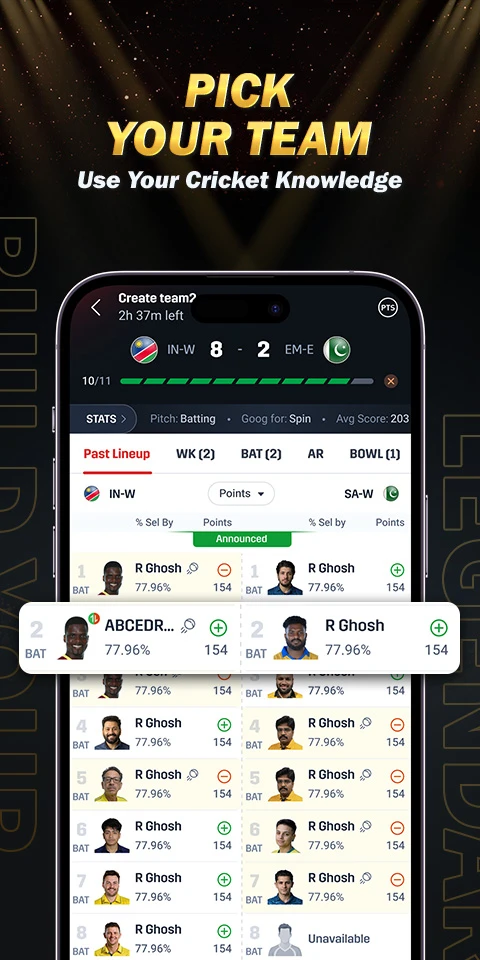
Data Signals That Matter Most in Fantasy Cricket
Information overload can hurt performance. COME SPORTS teaches users to focus on data signals with direct influence. Role certainty, expected overs or balls faced, matchup history, surface behavior, and pressure-phase influence generally carry more predictive value than broad sentiment.
One useful method is weighted signal scoring. Assign each core signal a score from 1 to 5 and compute an overall confidence profile for each player. Then compare that with price and likely ownership to identify value gaps. This process helps users make evidence-based picks and avoid emotional bias.


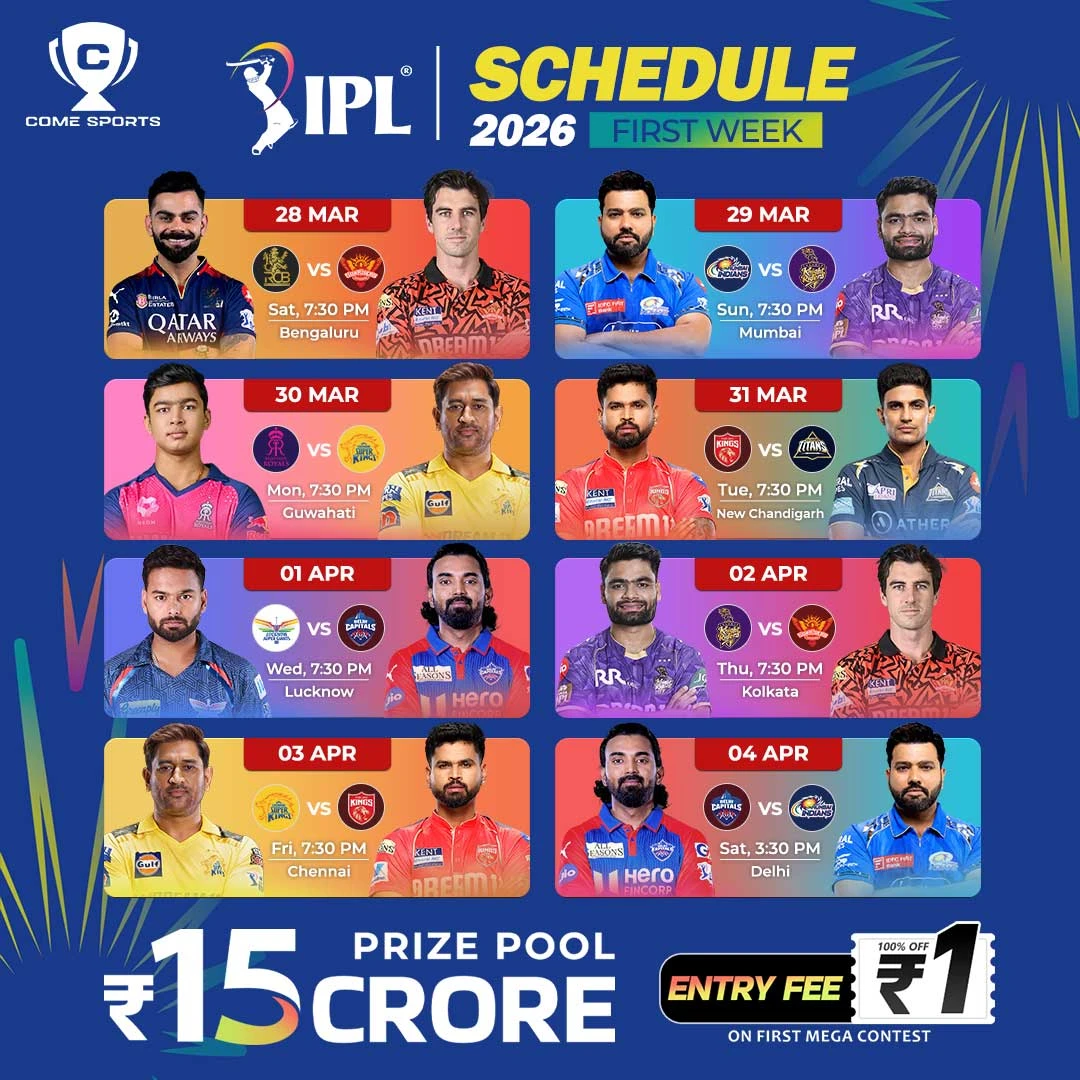


Execution Timing: What to Do Before Lock and During Live Play
Execution timing is where many strong lineups fail. A correct plan can break if users ignore update timing. COME SPORTS suggests a three-window schedule. Window one: long-list generation and core script design. Window two: shortlist refinement after team confirmations. Window three: final lock review with strict no-panic rule.
During live phases, avoid overreacting to early variance. Instead, monitor points sync and rank movement against your planned distribution. If you built lineups with controlled variance, early swings are normal. Good process should be judged over complete match cycles, not early moments.
After completion, record key insights immediately while memory is fresh. Did the toss invalidate assumptions? Did role volatility exceed expected range? Did captain choice fit the final script? This post-match capture is critical for long-term progress.
- Set pre-lock deadlines for each decision block.
- Separate update-driven edits from emotion-driven edits.
- Use live rank movement as feedback, not as panic trigger.
- Save one concise review note per lineup after each match.
Advanced Training Curriculum for Long-Season Improvement
COME SPORTS training is most effective when users follow a curriculum instead of random experimentation. Week one should focus on role consistency analysis. Week two should focus on captain and vice-captain modeling. Week three should focus on exposure management. Week four should focus on review intelligence and bias control. Repeat this cycle and refine based on results.
The objective is compounding edge. Small weekly improvements can create significant season-level difference. Users who complete structured review cycles usually become faster and more accurate in decision-making under pressure.
- Week 1: role certainty and context mapping.
- Week 2: multiplier strategy and script alignment.
- Week 3: exposure tiering and bankroll discipline.
- Week 4: post-match review and bias correction.
- Monthly: compare predicted outcomes vs actual outcomes and update your model.
IPL 2026 Playbook: Competitive Structure for High-Pressure Windows
IPL 2026 windows are fast, noisy, and opportunity-rich. Professional users need a strict routine to stay sharp. COME SPORTS recommends a daily playbook: morning data pass, afternoon shortlist, pre-lock decision validation, and post-match capture. Keep this routine unchanged across weeks to reduce cognitive drift.
You should also separate strategic goals by contest type. Some lineups are for stable consistency, others for controlled upside. Mixing these objectives within one lineup often creates weak architecture. Maintain objective clarity and track results accordingly.
Finally, maintain confidence-weighted exposure. Over-committing on unclear matches increases variance unnecessarily. Controlled scale with evidence-backed confidence is a stronger path for long-cycle success.



Internal Learning Routes on COME SPORTS
Use these internal routes to move quickly between training content, scoring references, and performance pages.
- Home strategy hub: home.
- Current tutorial page: how to play.
- Scoring logic breakdown: points system.
- Performance data center: ipl 2026 player stats.
- Proof and outcomes page: winners list.
- Onboarding and mobile route: download app.
Advanced Team Logic and Match Review System for Competitive Users
If you want to move from average performance to consistent high-level outcomes, you need a system that works across different match contexts. COME SPORTS is designed for users who value this discipline. The first principle is structural thinking. Do not treat your XI as a list of names. Treat it as a tactical system where every selection has a purpose in the expected match script. A lineup with clear internal logic usually performs better over long cycles than a lineup built from mixed instincts.
Start with role cluster mapping. Divide players into clusters such as stable involvement, conditional upside, and volatility-based leverage. This creates clarity. Stable involvement players help protect floor, conditional upside players expand expected gain under specific scripts, and leverage players create rank separation when your context read is accurate. Without this structure, users often overstack one risk type and reduce lineup reliability.
Next, run script validation. Ask one direct question: if this match follows the most likely pattern, does my XI remain competitive? Then run a second question: if one key assumption fails, does my XI collapse or stay viable? Good users build resilience by ensuring the lineup can survive moderate variance. This does not remove risk, but it prevents unnecessary fragility.
Captaincy should follow script confidence, not hype momentum. If the script is clear, targeted captaincy can be effective. If the script is mixed, use captain profiles with broader contribution probability. Vice-captain should either reinforce your primary script or hedge your main risk. Many users ignore VC architecture and lose consistency even with decent core selection.
Another important tool is ownership contrast analysis. In large pools, identical lineups compress outcome potential. You do not need extreme differentiation, but you need intentional differentiation. Replace one over-owned weak-fit pick with a context-valid alternative when evidence supports it. Over a season, these measured pivots can create meaningful ranking advantage.
Pre-lock timing should be segmented into three stages. Stage one: data freeze setup, where you stop collecting low-value noise and focus only on high-impact updates. Stage two: lineup final pass, where you confirm role fit, captain logic, and exposure alignment. Stage three: execution lock, where no unverified edits are allowed. This discipline protects your process during high-pressure minutes.
After the match, professional growth depends on review quality. Review should not be emotional. It should be diagnostic. Separate result from decision quality. A good decision can lose in short-term variance. A poor decision can win once. Score your decisions by evidence quality, not only by final rank. This mindset helps users build durable skill instead of chasing short-term confirmation bias.
COME SPORTS users can apply a four-tag review model: correct assumption, weak assumption, execution error, and variance event. Correct assumption means your read matched match reality. Weak assumption means your data interpretation was incomplete. Execution error means your process broke under timing pressure. Variance event means your process was reasonable but result was affected by low-probability shifts. Tagging each lineup this way accelerates learning speed.
Weekly synthesis is equally important. Do not review only match by match. At the end of each week, aggregate your tags and identify patterns. Are you consistently overestimating top-order stability? Are you underweighting venue effects? Are you using too much leverage in low-confidence fixtures? These recurring patterns are where performance gains are found.
Exposure governance should be planned before the week begins. Allocate a base exposure band, an expansion band for high-confidence matches, and a reserve band for uncertain periods. This model improves bankroll stability and decision clarity. It also prevents panic escalation after one poor result. Professional users protect consistency first and scale only when confidence and data align.
When guiding newer users, keep teaching practical. Avoid complex jargon at the start. Teach one strong checklist first: role certainty, script fit, captain logic, and exposure control. Once this becomes habit, add deeper layers like ownership contrast and variance tagging. COME SPORTS supports this progression from beginner clarity to advanced execution without changing the core framework.
In IPL 2026 windows, this system becomes even more valuable. High match frequency creates fatigue and decision drift. Users with a repeatable framework are less likely to make impulsive entries. Users without structure often react to crowd sentiment and lose consistency. The difference is process, not effort.
Finally, remember that high performance is a compounding process. One great day does not define skill. One poor day does not erase skill. Keep the cycle active: analyze, construct, execute, review, refine. COME SPORTS is built for this exact rhythm. If you follow it with discipline, your decision quality will improve, your confidence will stabilize, and your season outcomes will become more predictable and competitive.



HOW TO PLAY FAQ
Quick answers for users building a professional fantasy workflow.