
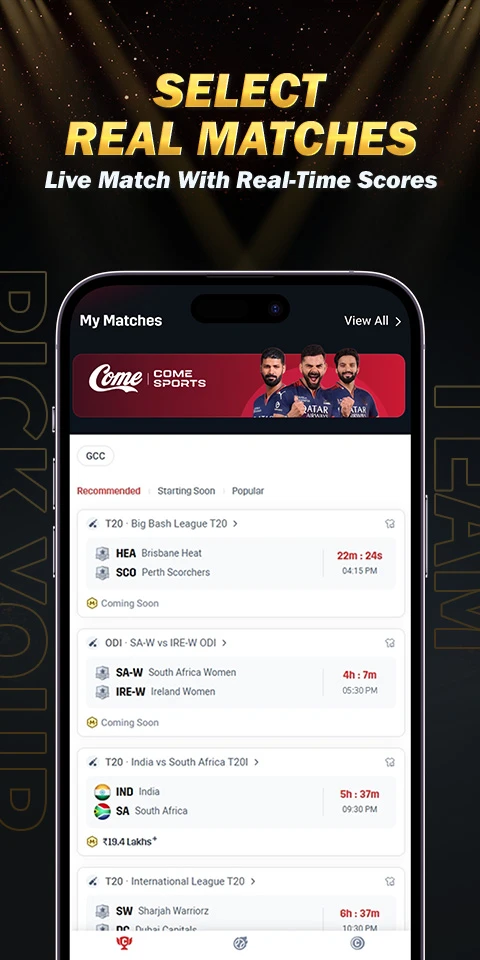
Detailed Points System: Batting, Bowling, and Fielding Scoring on COME SPORTS
Official Domain: comefantasy.comThis page is the complete scoring guide for competitive users on COME SPORTS. It explains how batting, bowling, and fielding events convert into fantasy points, and how expert users can turn scoring mechanics into better team-building decisions. If you want consistent rank performance, understanding the points model is not optional. It is the foundation of strategy.
COME SPORTS is positioned as an advanced strategy center, so this guide goes beyond basic definitions. It covers scoring structure, role-value interpretation, bonus and penalty dynamics, captain multiplier logic, and practical ways to align your XI with expected point distribution patterns.
Use this page as your reference before each match cycle and as your review base after results are finalized. Professional users revisit scoring logic regularly because slight interpretation differences can create large rank impact over a season.
Why the Points System Defines Winning Quality
Many users focus only on player names, but elite users focus on point opportunity architecture. A player’s value changes depending on how points are awarded for run contribution, wicket events, economy control, strike behavior, and field impact. If you build lineups without points-model awareness, you may pick good players but still miss high-value scoring roles.
COME SPORTS encourages users to map player roles to point pathways. Which roles collect stable base points? Which roles offer high ceiling through event spikes? Which roles combine both and deserve multiplier consideration? These questions create decision clarity and reduce random entries.
Batting Pathways
Runs, boundary impact, strike efficiency, and milestone triggers can drive major point totals.
Top-order stability and role clarity matter for floor-plus-ceiling balance.
Bowling Pathways
Wickets, maiden-style control events, economy influence, and dismissal modes can create strong upside.
Context matters: overs role and phase usage define true value.
Fielding Pathways
Catches, run-out involvement, and stumping-type events can add decisive swing points.
Fielding upside is often underestimated in close leaderboard margins.
Reference Scoring Table for Batting, Bowling, and Fielding
The table below is a practical scoring structure reference for strategy training on COME SPORTS. Use it to estimate role value and plan captain logic. Actual contest rules should always be verified in the live contest interface before entry.
Batting Scoring Deep-Dive: Run Volume, Strike Quality, and Milestone Timing
Batting points are not only about total runs. Elite users track how runs are scored and when they are scored. Boundary acceleration can raise ceiling quickly, while milestone progression can stabilize floor and protect rank consistency. COME SPORTS users should evaluate expected ball share, batting position security, and opposition bowling phase behavior before selecting core batting anchors.
For advanced users, one practical approach is role-tier stacking. Keep one high-stability batter, one momentum batter, and one contextual upside batter. This creates balance across predictable and volatile scoring windows. When combined with correct captain logic, this structure improves expected output without over-concentrating risk.
Another key point is penalty awareness. If strike-efficiency penalties apply in low-tempo innings, certain profiles lose value unless they compensate with milestones or late acceleration. Always interpret batting value through full scoring context, not raw popularity.
- Prioritize position security over short-term hype.
- Use milestone probability in captain shortlist design.
- Balance boundary upside with role consistency.
- Review strike behavior against expected game pace.

Bowling Scoring Deep-Dive: Wicket Value, Economy Balance, and Spell Context
Bowling points often decide leaderboard separation in tactical matches. Wickets deliver heavy upside, but economy controls and phase usage define consistency. A bowler with fewer wickets but strong economy and role stability can outperform a volatile profile in many contest structures. COME SPORTS users should map expected overs role first, then project wicket opportunity.
Death-over roles may offer high wicket bursts but carry economy risk. Middle-over control roles may deliver steady value with lower volatility. New-ball specialists may gain early swing benefits depending on pitch and conditions. Smart users combine these role types intentionally instead of selecting from one archetype only.
In high-pressure windows, one dismissal cluster can move ranks quickly. That is why bowlers with realistic multi-wicket pathways deserve careful evaluation in captain or vice-captain plans where context supports the upside profile.




Fielding Scoring Deep-Dive: Hidden Edge in Tight Leaderboards
Fielding points are often treated as bonus extras, but in close contests they can decide rank outcomes. Catch opportunities, run-out involvement, and wicketkeeper event patterns can add decisive margins. High-quality users include fielding probability in final selection instead of assuming it is random noise.
A practical method is interaction mapping: identify players likely to be involved in active catching zones, direct-hit opportunities, or keeper-led dismissals under expected match scripts. While fielding events are less predictable than core batting and bowling output, they provide valuable separation in balanced contests.
When building final combinations, use fielding upside as a secondary tie-breaker between two similarly rated picks. Over long cycles, these small edges compound and improve leaderboard consistency.
- Use fielding probability as tie-breaker in close pick decisions.
- Track keeper involvement trends across venue profiles.
- Combine core role value with realistic fielding event upside.
- Review fielding point contribution in weekly summaries.
Multiplier Strategy: Captain and Vice-Captain Under the Points Model
The points system becomes most powerful when connected to multiplier roles. Captain and vice-captain selection should follow event-density logic, not trend chasing. Choose multiplier profiles with strong expected involvement under your primary script. If uncertainty is high, use VC to hedge volatility. If confidence is high, targeted multiplier stacks can create significant rank separation.
Advanced users run script-based multiplier grids: safe script, balanced script, and upside script. This allows clearer decision-making and better post-match diagnosis. COME SPORTS encourages this model because it improves repeatability and reduces emotional shifts after short-term variance.
- Captain = highest script-aligned event density.
- Vice-captain = risk control or secondary upside anchor.
- Use one multiplier setup for stable contests and one for aggressive contests.
- Review multiplier outcomes weekly with evidence tags.
Internal Routes for Rule and Strategy Navigation
Move quickly between scoring knowledge and performance pages using these routes.
- Home strategy hub: home.
- Gameplay training page: how to play.
- Current scoring page: points system.
- Performance data route: ipl 2026 player stats.
- Outcome proof page: winners list.
- App onboarding route: download app.
Advanced Scoring Interpretation for IPL 2026 Cycles
During IPL 2026, scoring volatility increases because match contexts vary rapidly. Users who interpret scoring through script probabilities can adapt faster than users who follow static patterns. For example, a low-scoring surface may reduce boundary bonuses but increase bowling control value. A high-tempo surface may amplify batting ceilings and punish conservative role assumptions.
COME SPORTS users should create pre-match scoring forecasts by role cluster and compare them with actual outcomes after completion. This method turns every match into a training cycle and accelerates scoring literacy. Over time, users begin to identify scoring inefficiencies before lock and build stronger combinations consistently.
The best long-season users are not those who guess perfectly once. They are those who learn scoring patterns faster and adjust more accurately across consecutive fixtures.




Practical Scoring Case Studies: From Raw Events to Elite Decisions
Understanding rules is the first level. Applying rules under match pressure is the professional level. This section shows how advanced users on COME SPORTS convert scoring mechanics into actionable lineup improvements. The focus is on process clarity: identify event-weight concentration, map role utility, and evaluate whether multiplier decisions are aligned with point-density opportunities.
Case Study A: Balanced Pitch, Moderate Tempo Match. In this environment, batting output is distributed rather than concentrated. Boundary bonuses still matter, but milestone reliability often becomes more important than explosive strike bursts. A professional user may prioritize stable top-order roles and one middle-order anchor with context-specific acceleration potential. Bowling value shifts toward control-plus-breakthrough profiles rather than pure wicket volatility. If economy bonuses are significant, disciplined spell bowlers can outperform high-risk options even with fewer wickets.
Case Study B: High-Scoring Surface with Aggressive Powerplay. Here, boundary rate and strike momentum can create rapid point spikes. Users should model expected run clusters and identify who benefits most from high-tempo innings. Captain selection may lean toward high-involvement batter roles, while VC can be used to hedge through all-phase contributors. In this script, bowling value depends on dismissal opportunity concentration at transition phases. Users who pick only economy profiles may underperform if wicket bursts dominate point flow.
Case Study C: Bowling-Dominant Conditions with Variable Bounce. In such matches, batting penalties and low-conversion innings can reduce expected batting floor. Professional users increase weight on wicket pathways, maiden-control value, and fielding event probability tied to edge-producing conditions. Captaincy can shift to role-stable bowlers when script confidence supports it. The key is not forcing batting-heavy logic in contexts that structurally favor bowling points.
Case Study D: Close Match with Late Over Volatility. These matches often produce dramatic rank movement in final phases. Users should model end-over dismissal potential, finishing role uncertainty, and run-out probability during pressure chases. Fielding upside becomes relevant as tie-break value. A lineup with balanced late-phase exposure can outperform an over-concentrated early-innings script in these conditions.
From these cases, one principle remains constant: scoring logic must drive selection logic. Names and narratives are secondary. If your XI does not align with the likely point-distribution map, ranking outcomes become inconsistent over time. COME SPORTS encourages users to build scoring maps before finalizing entries. This one habit alone can improve decision quality significantly.
Another advanced method is role sensitivity scoring. Assign each player a sensitivity label: low, medium, or high sensitivity to script shifts. Low-sensitivity players maintain value across multiple scripts and help stabilize floor. High-sensitivity players offer large upside but require stronger contextual confidence. Mix these labels carefully based on contest objective. Stable contests need more low-sensitivity core. Aggressive contests can support controlled high-sensitivity exposure.
Professional users also run post-match decomposition. Break total points into batting core, bowling core, fielding edge, and multiplier impact. This decomposition reveals where your lineup model succeeded and where it broke. If multiplier impact is repeatedly weak, captain logic needs recalibration. If fielding edge is always zero, tie-break selection rules may be too narrow. If bowling decomposition fluctuates heavily, role-phase assumptions may need stronger filtering.
Weekly decomposition review is especially useful during IPL 2026 because fixture density can hide recurring mistakes. A user may feel performance is random, while decomposition shows a clear pattern, such as overcommitting to unstable middle-order picks or underweighting death-over wicket potential. Once patterns are visible, corrections become straightforward.
To operationalize this, use a short pre-lock checklist: expected script, core role map, sensitivity balance, multiplier alignment, and exposure cap. Then use a short post-match checklist: decomposition output, variance notes, and next-match correction. This two-checklist model is simple, repeatable, and highly effective for long-cycle improvement.
COME SPORTS is built for users who value this kind of precision. The more accurately you read the points system, the more efficiently you can build lineups, assign multipliers, and manage risk. Over a season, these small precision gains compound into substantial competitive advantage.




POINTS SYSTEM FAQ
Key scoring questions for strategic users.